Nursery sleep guide
Naturepedic Crib Sleep: Materials, Fit, and Care for a Nursery
A crib mattress is a quiet piece of the nursery landscape: mostly unseen beneath a fitted sheet, yet central to the sleep space families prepare for a new arrival. Choosing one means looking beyond a label or a list of materials. Construction, dimensions, cleaning instructions, and safe-sleep practices all matter. For Canadian families considering a Naturepedic crib mattress, this guide offers a practical way to examine those details and make a measured choice.
Published November 3, 2026
Begin with the sleep space, not the sales language
Nursery planning can turn a simple purchase into a maze of claims: organic, natural, breathable, waterproof, lightweight, two-stage. Some of these words describe materials or design features; none should distract from the fundamentals. A crib mattress must fit the crib correctly, provide the firm, flat surface recommended for infant sleep, and be used in a clear sleep space. A reassuring material story cannot make an ill-fitting mattress appropriate.
Health Canada’s safe-sleep guidance is a useful starting point for families. Follow current federal recommendations and the instructions supplied with the crib and mattress. In general, an infant’s sleep space should be uncluttered, with a firm, flat mattress covered by a tightly fitted sheet. Keep pillows, quilts, loose blankets, soft toys, positioners, and other soft items out of the crib. If you have questions about your baby’s sleep or a particular product, consult a qualified health-care professional or an authoritative Canadian public-health resource.
This distinction helps keep the decision grounded. Mattress features can influence ease of handling, surface feel, cleaning routines, and a family’s material preferences. They do not replace safe-sleep practices or medical advice.
What the materials tell you—and what they do not
Naturepedic’s Lightweight Organic Cotton Crib Mattress is described as using GOTS-certified organic cotton, a waterproof polyethylene surface, a seamless construction, and a non-toxic fire protection system. The product information also describes WaveSupport technology and states that the mattress contains no foam. These are useful points to investigate when comparing crib mattresses, but they are not a substitute for reading the complete product documentation, checking current certifications, or confirming that the specific model meets applicable Canadian requirements.
Organic cotton is a material choice, not a guarantee that every part of a finished product is organic. Families interested in certification can check what the certification applies to, whether it is current, and which components are covered. Certification standards have defined scopes; a label should be understood in that context rather than treated as a broad promise about every possible health outcome.
The Naturepedic listing describes a waterproof surface made with food-grade polyethylene. A waterproof layer can be practical in a nursery because it helps limit liquid penetration into the mattress. The listed design is also described as seamless, a detail that may make surface clean-up more straightforward. Waterproofing does not mean a mattress can be submerged, washed in a machine, or cleaned with any household product. The manufacturer’s own care instructions should determine what is safe for the materials and construction.
The listing emphasizes that the Lightweight Organic Cotton model has no wool, latex, or soy. That information may help caregivers who are comparing ingredient lists or trying to understand a product’s material composition. It should not be read as a guarantee that a child will not have an allergy or sensitivity. When a known allergy or medical concern is involved, ask a health-care professional for advice and contact the manufacturer for complete, current material information.
Material descriptions can also be a reminder to ask useful questions: What is the cover made from? Is the surface waterproof? How is the product cleaned? What is the fire-barrier construction? Are certifications documented for the finished product or particular materials? Clear answers make it easier to compare mattresses on substance rather than on a single evocative word.
Firmness, structure, and the infant sleep surface
A crib mattress is not chosen in the same way as an adult mattress. The goal is not to select a plush surface for a newborn. Canadian safe-sleep guidance calls for a firm, flat sleep surface. A mattress should retain its shape and fit its crib without hazardous gaps around the edges. Soft toppers, extra padding, and aftermarket inserts can change the sleep surface and should not be added unless explicitly permitted by current safety guidance and the product instructions.
Naturepedic describes WaveSupport as a structural support system and says the mattress provides firm support. Families comparing construction can look for clear explanations of the core, the firmness, and any layers or barriers. Product descriptions are a starting point: inspect the manual and safety documentation for the exact model and size you are considering. Avoid relying on a showroom impression alone, since a mattress that feels firm under an adult’s hand still needs to be used as directed and fit the intended crib.
Some crib mattresses are designed with two stages, offering one side intended for an infant and another for a toddler. The product listing identifies a two-stage option in the Naturepedic range, with a firm side for a baby and a softer side described for toddler use. Families should verify that they are looking at the correct model and follow the manufacturer’s directions about which side to use and when to turn the mattress. A two-stage label does not mean the mattress should be flipped early or used in a way that conflicts with the crib’s instructions or current safe-sleep recommendations.
Measure the crib before choosing a mattress
Fit is one of the least glamorous parts of nursery planning—and one of the most consequential. The Naturepedic product information lists approximate dimensions of 27¼ by 51⅝ inches and a thickness of about 6 inches for the standard-size model. Dimensions can vary by model, production details, or the way a manufacturer reports measurements, so use the current specifications for the exact mattress you plan to buy.
First identify the crib’s make and model, then consult its manual for the required mattress size and any limits on thickness. Measure the inside of the crib if the manufacturer’s instructions recommend it, and compare those measurements with the mattress specifications. Do not assume that “standard crib” means every mattress will fit every crib equally well. If the mattress is compressed in packaging, allow it to expand as instructed before assessing the fit.
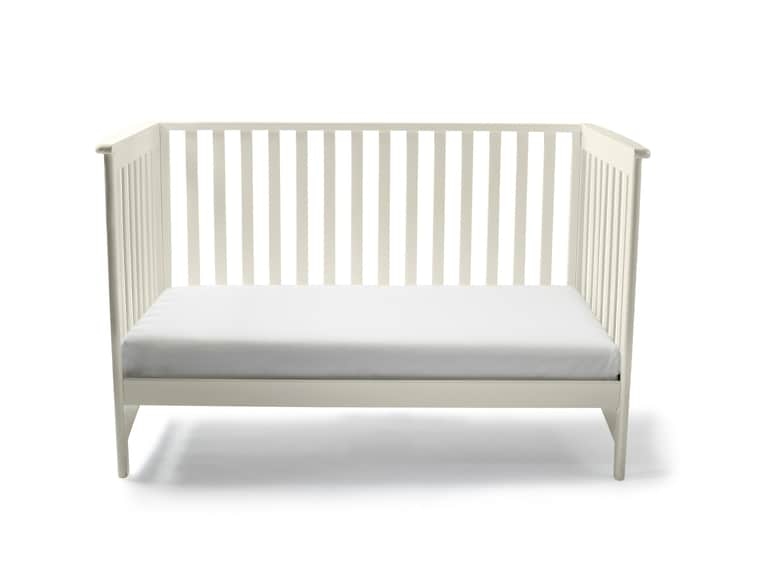
Once set up, check the mattress around the entire perimeter. It should lie flat and fit snugly in the crib, without a large gap at any edge. Follow the crib manufacturer’s instructions for an appropriate fit check; do not improvise a test that conflicts with the manual. If the mattress appears too small, too large, bowed, or otherwise incompatible, stop using it in that crib and contact the manufacturer or retailer for guidance.
Also confirm that the mattress thickness works with the crib’s support settings. As a child grows and begins to sit or stand, caregivers may need to lower the mattress support according to the crib manual. The crib’s assembly, hardware, and condition matter alongside the mattress. A well-made mattress cannot compensate for a damaged crib, missing hardware, or a setup that does not follow the instructions.
A closer look at the Lightweight Organic Cotton model
For families comparing Naturepedic options, the listed Lightweight Organic Cotton Crib Mattress is notable for its reported weight of 12 pounds or less, waterproof surface, and seamless construction. The product details also identify a lightweight model weighing about 10 pounds and a two-stage version listed at about 11 pounds; specifications can differ among models. Check the exact model code and current details before ordering, especially if weight is important for changing sheets or moving the mattress.
A lighter mattress may be easier for an adult to lift during routine bedding changes. In a nursery, that everyday task can become frequent, so handling is a practical consideration. Still, light weight alone should not decide the purchase. Compare it with the fit, support, safety information, materials, care instructions, warranty, and compatibility with the crib.
The product listing says the mattress is made in the United States. For Canadian buyers, it is sensible to check shipping arrangements, delivery estimates, applicable taxes or fees, return conditions, and warranty coverage in Canada before purchasing. Cross-border details can affect what happens if a product arrives damaged, does not fit, or needs service later. Confirm these terms with the seller rather than assuming that a policy shown for another country applies to a Canadian order.
See the current product details for the Naturepedic Lightweight Organic Cotton Crib Mattress. Product availability and specifications may change, so review the retailer and manufacturer information for the model you intend to use.
Everyday care: keep cleaning simple and specific
Nursery care is often a cycle of small, ordinary tasks: changing a sheet, wiping a surface, checking for moisture, and returning the sleep space to its uncluttered state. A waterproof surface may make routine spills easier to manage, but the manufacturer’s care instructions should guide every cleaning step. Before first use, locate the care label and manual, and keep them somewhere accessible.
Unless the instructions explicitly allow it, do not machine-wash the mattress, soak it, use a steam cleaner, or apply bleach, solvents, or abrasive products. Strong cleaners can damage a surface or leave residues. A gentle wipe with the method approved by the manufacturer is usually a more cautious approach, but the specific product directions take priority. Let a cleaned surface dry completely before putting on a fitted sheet, following the care guidance.
Use only a fitted sheet designed to fit the mattress securely. Avoid adding a quilted pad, topper, or second mattress layer unless the manufacturer and current safe-sleep guidance clearly permit it. If a family uses a protector, check whether it is compatible with the mattress, fits securely, and is allowed by the crib and mattress instructions. A poorly fitted layer can bunch or alter the intended surface.
Inspect the mattress periodically for damage, separation, persistent odour, unusual soft spots, or signs of moisture reaching the interior. If you notice a problem, consult the product documentation and contact the manufacturer. Do not attempt a repair or add padding to disguise a defect. Keep the sleep surface in good condition and follow any instructions about rotation, orientation, or use of a two-stage design.
When storing a mattress, use the manufacturer’s guidance about orientation, temperature, and protection. Avoid folding or compressing it unless the product was designed for that method. Before reusing a stored mattress, inspect it and make sure it remains clean, dry, structurally sound, and suitable for the crib.
Build a comparison around the questions that matter
Comparing organic crib mattresses can be easier when every option is examined through the same set of questions. A short checklist helps separate features that matter to your household from language that merely sounds reassuring.
- Fit: Do the mattress dimensions and thickness match the crib manual?
- Sleep surface: Is the mattress described as firm and flat, and does its use align with current Canadian safe-sleep guidance?
- Construction: What materials and structural components are identified for the exact model?
- Certifications: Which parts of the product are certified, by whom, and under what standard?
- Care: How should the surface be cleaned, and what products or methods should be avoided?
- Handling: Is the weight manageable for the adults who will change bedding?
- Practical terms: What are the Canadian shipping, return, warranty, and customer-service arrangements?
- Product life: Are there instructions for a two-stage model, storage, inspection, or eventual replacement?
This method also keeps comparisons fair. A model with a waterproof surface may be convenient for one family; another may give greater weight to certifications, a lighter build, or a particular material profile. There is no need to treat any one feature as universally decisive. What matters is that the mattress fits the crib, is used as directed, and meets the family’s practical needs without compromising safe-sleep fundamentals.
A note for Canadian families
Canadian households span coastal dampness, dry prairie winters, humid summers, and apartments where nursery space may be limited. Those differences can influence how families think about cleaning, storage, and ease of handling. They do not change the importance of a firm, flat, correctly fitted sleep surface. Use Health Canada’s current safe-sleep information and check that the crib and mattress are suitable for one another.
When buying a product sold across borders, keep a record of the model name, purchase date, receipt, manuals, and any warranty information. Confirm the applicable return window and whether customer support can assist Canadian purchasers. If a product is recalled or its instructions change, having the exact model and purchase details makes it easier to identify the item and respond appropriately. Consult official Canadian recall information when researching products, and contact the manufacturer if anything about the mattress or its documentation is unclear.
Prepare the nursery with confidence, not clutter
The last step is often the simplest: place the mattress in the crib according to the manuals, dress it with a tightly fitted sheet, and leave the sleep space clear. The nursery may be surrounded by folded blankets, carefully chosen textiles, and the small objects that make a room feel ready. In the crib itself, simplicity is purposeful.
For a Naturepedic crib option, investigate the exact materials, verify dimensions, read the cleaning instructions, and confirm Canadian purchase terms before deciding. Treat claims about organic content and construction as details to verify, not as shortcuts around fit or safety. A thoughtful choice is less about finding a perfect phrase on a product label than understanding how the mattress will function in the actual crib, through daily care and the changing seasons of family life.
When those practical questions are answered, the mattress can take its modest place in the room: flat, secure, and ready for use as directed. The most important nursery preparation is not elaborate. It is a careful match between the crib, the sleep surface, and the guidance families follow every night.
Quick checklist before setup
- Confirm the crib and mattress models are compatible.
- Check the mattress dimensions and thickness against the crib manual.
- Inspect the mattress for damage and allow it to expand as instructed.
- Use a tightly fitted sheet and keep the crib free of loose or soft items.
- Read the manufacturer’s cleaning and two-stage-use instructions.
- Review current Health Canada safe-sleep guidance and contact a professional with health questions.