Bedding guide · Canada
Mattress Protector Fit: How to Choose the Right Depth and Fabric
A protector does its best work when it stays quietly in place: no creeping corners, tight seams, or crumpled fabric under the sheet. Getting that fit right starts with a careful measurement, then a closer look at fabric, waterproofing, and care. These details can help shield a mattress from everyday wear without needlessly changing the way it feels.
Published November 19, 2026
Why fit matters
A mattress protector is a quiet layer between the mattress and the rest of the bed. It may be designed to guard against moisture, dust, dirt, or ordinary wear, depending on its construction. But even a well-made protector can be frustrating if it does not fit the mattress beneath it. Fabric that is too tight may pull at the corners or resist being tucked into place. One that is too loose can gather into folds, shift during the night, or make the sheet above it feel uneven.
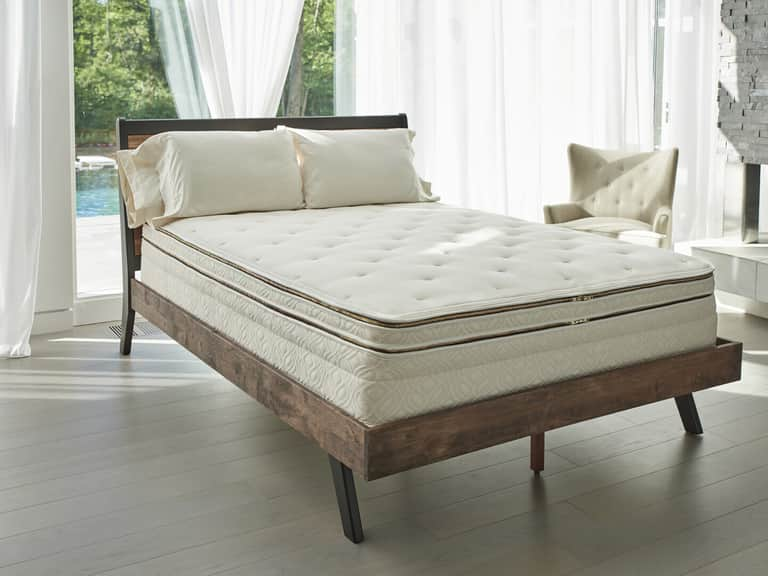
The challenge is that mattress depth is not always obvious from the side of the bed. A mattress may include a built-in pillow top, a deep comfort layer, or a shape that differs from the standard profile. A separate topper adds still more height. And the measurement on a protector’s packaging may describe a maximum depth, a pocket depth, or a range—not necessarily the thickness of the mattress it is meant to cover.
A few minutes with a tape measure can make the difference between a smooth, secure layer and one that needs constant adjustment. The aim is not to stretch fabric to its limit. It is to find a protector whose stated fit accommodates the full mattress profile, with enough room for its corners and elastic to sit naturally.
Measure the mattress, not just the side panel
Start by measuring the mattress from its upper sleeping surface to the bottom edge. Include a built-in pillow top or any permanently attached cushioning. Measure at a corner or along the side where the profile is clear, and keep the tape measure straight rather than following the mattress’s contours. If the mattress has rounded edges, take a second measurement nearby to check whether the height varies.
If you use a separate topper, decide whether it will sit beneath the protector or above it. A protector placed over both the mattress and topper must accommodate their combined height. Measure the full stack as it will be used: mattress, topper, and any other layer intended to remain under the protector. A thick topper can turn a protector that once fit easily into one that is stretched close to its limit.
Record the bed’s length and width as well as its depth. Mattress sizing can vary by model, and a protector needs to match the mattress’s footprint, not only its height. Canadian shoppers may encounter familiar names such as Twin, Double, Queen, and King, but it is sensible to check the actual dimensions when buying for a specific mattress. Split sizes and adjustable beds may need separate pieces for each side.
- Measure the full height. Include any built-in pillow top and any topper that will be covered.
- Check the footprint. Confirm the protector’s size matches the mattress’s length and width.
- Look for a stated range. Compare your measurement with the protector’s listed pocket depth or maximum mattress depth.
- Consider the bedding below it. A fitted sheet or other layer placed beneath the protector can affect how much material needs to stretch around the edge.
A useful rule is to choose a protector that explicitly accommodates your measured depth, rather than one whose maximum is exactly equal to it. Product sizing is not perfectly standardized, and fabric construction, elastic placement, and corner design all affect how the protector fits in practice. A little allowance can make application easier and reduce strain on the seams.
Understand pocket depth and maximum fit
“Pocket depth” usually refers to the side panel or skirt that wraps around the mattress. “Fits mattresses up to” describes the maximum depth the maker says the protector can accommodate. These numbers are useful, but they are not always interchangeable. A deep pocket does not guarantee a good fit if the protector’s length and width are wrong, and a stated maximum is not an invitation to stretch the fabric beyond its intended use.
Fitted protectors commonly rely on elastic around the perimeter, a stretch-knit skirt, or fitted corners to hold the layer in place. The design should pull snugly around the mattress without lifting the edges or creating tension across the top. Once fitted, the protector should lie reasonably flat. If the corners spring free, the skirt rides up, or the fabric is visibly taut, the size or depth may not be right.
At the other extreme, excess fabric can cause wrinkles. These may be especially noticeable under a thin sheet, and they can make the sleeping surface feel less even. A loose protector is not necessarily a protective failure, but frequent movement can be inconvenient and may leave parts of the mattress less consistently covered. Fit is therefore a matter of both coverage and comfort.
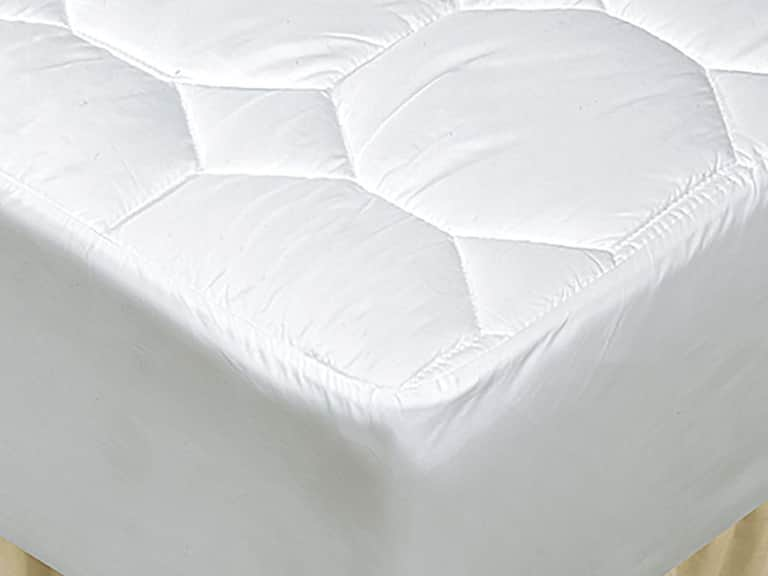
Product examples show how specifications can help shoppers compare options. The DownTown Company Luxury Cotton Mattress Pad, for example, is described as having 18-inch deep pockets and a flexible jersey-knit skirt. It is a washable, cotton-filled mattress pad rather than a thin, simple barrier. That distinction matters: its construction adds a softly cushioned layer, so it may alter the surface feel more than a lightweight protector. Check its stated dimensions and care guidance against your mattress before choosing it.
Choose fabric for the job—and for the feel you want
Fabric changes how a protector feels, how it handles moisture, and how it behaves in the wash. Natural and synthetic fibres can both be used in mattress protection, and the label’s full construction tells a more useful story than a single material name. A cotton surface, for instance, may feel soft and familiar, while a waterproof layer beneath it determines whether liquid can pass through.
Breathable designs are intended to allow airflow through at least part of the protector’s construction. They can be a reasonable choice when the main goal is to help guard against ordinary wear while preserving the feel of the mattress. “Breathable,” however, does not mean every layer is open to air in the same way. Construction varies, so look for clear information about the materials and intended performance rather than assuming all products with the same label feel alike.
Waterproof protectors add a barrier that helps prevent spills and other moisture from reaching the mattress. The barrier may be laminated or otherwise integrated into the fabric. Consider how often liquid protection matters in your household and whether the product is described as quiet or crinkle-free. A waterproof layer can be thin and flexible, but its presence may still affect the hand feel, drape, or warmth of the bed. If you are sensitive to texture or temperature, those details deserve attention.
Mattress pads are another category to distinguish from protectors. A pad is often designed to add cushioning as well as provide a washable layer between the sleeper and mattress. Its fill and quilting may change the way the surface feels. A protector, by contrast, is commonly selected primarily for coverage and protection, though products vary and some combine features. Read the construction carefully: the name alone may not tell you whether a product is padded, waterproof, or both.
Before buying, ask what you want the layer to do. Is it meant to help guard against spills, dust, everyday soil, or general wear? Do you want the mattress’s original feel to remain as unchanged as possible, or would a little extra softness be welcome? A clear answer helps narrow the field without treating any one fabric as universally best.
Balance waterproofing with comfort
Waterproofing can be useful where spills are a realistic concern, but not every bed has the same needs. A guest room, a household with pets, a child’s bed, and a mattress used by someone who wants protection from occasional accidents may call for different priorities. The key is to match the level of protection to the likely exposure, rather than choosing by a broad claim alone.
Check whether the product is described as fully waterproof or as offering protection against everyday wear. Those are not equivalent promises. Look for care instructions and any limitations stated by the maker, including whether the barrier needs special handling. If coverage around the sides matters, confirm whether the design encloses the mattress or only covers the top. A fitted protector generally covers the sleeping surface and wraps around the edge; a zippered encasement is designed to surround the mattress more completely.
Comfort depends on more than fibre. The thickness of the top layer, the type of backing, the quilting, and the way the protector is tensioned all contribute to the final feel. A protector that fits smoothly is less likely to introduce folds beneath the sheet. If maintaining the mattress’s original surface is important, choose a low-profile construction and check whether the maker says it is designed to preserve the bed’s feel.
Care instructions affect fit over time
A protector’s fit is not a one-time question. Repeated washing and drying can affect fabric, elastic, and waterproof layers. Follow the care label, paying attention to water temperature, detergent guidance, bleach restrictions, and drying heat. A product that tolerates machine washing may still have limits on tumble-drying temperature. High heat can damage some materials or contribute to shrinkage, while bleach or harsh cleaning agents may weaken fabrics or finishes.
Before washing, check that the protector fits in the machine without being crammed tightly. Use the maker’s recommended cycle and dry it as directed. If the instructions call for low heat or air drying, treat that guidance as part of the product’s performance requirements. A protector that shrinks or loses stretch can become difficult to refit, even if it initially matched the mattress depth.
After laundering, allow the item to cool and settle before putting it back on the bed. Check corners, seams, and any waterproof backing for changes. If it no longer lies flat or the elastic has lost its hold, reassess the fit rather than forcing it over the mattress. A simple routine—washing when needed, avoiding prohibited heat, and inspecting the fabric—can help keep the layer useful and comfortable.
Care requirements also influence the practical value of a material. A plush cotton-filled pad may offer a different feel from a streamlined waterproof protector, but its washing and drying directions may differ too. Before purchase, read the instructions and consider whether they work with your household’s laundry routine. Ease of care is part of choosing the right bedding, not an afterthought.
Common fit problems and what to check
| What you notice | What to check |
|---|---|
| Protector corners keep slipping off | Confirm mattress depth, including any topper, and compare it with the stated pocket range. |
| Fabric pulls tightly across the top | Check that both the depth and mattress dimensions are within the product’s stated fit. |
| Wrinkles appear beneath the sheet | Look for excess skirt fabric or a size mismatch; smooth the protector before making the bed. |
| The bed feels different after adding protection | Review the protector’s padding, quilting, and waterproof backing; consider a lower-profile design. |
| The fit changes after laundering | Recheck the care label and drying temperature; inspect for shrinkage or loss of elastic. |
These clues are useful, but they do not replace product-specific instructions. If a protector is difficult to install, do not pull forcefully on the seams or elastic. Remove it, check the measurements, and make sure it is oriented correctly. A second person can help guide a fitted layer around a heavy mattress, particularly when the bed sits close to a wall or has a thick profile.
A practical shopping checklist
When comparing mattress protectors, use the same short list for each option. That makes it easier to separate useful specifications from general marketing language.
- Mattress size: Does the product match the bed’s actual dimensions and size designation?
- Total depth: Have you measured the mattress, built-in pillow top, and any topper that will sit beneath the protector?
- Fit range: Does the listed pocket depth or maximum mattress depth include your measurement with a comfortable margin?
- Coverage: Is it a fitted protector, a mattress pad, or a zippered encasement? Which surfaces and sides are covered?
- Material and feel: Is the top layer cotton, a synthetic textile, or a blend? Is there padding or a waterproof backing?
- Protection needs: Do you need waterproof coverage, or is a breathable layer for everyday wear more appropriate?
- Care: Can you follow the washing and drying instructions, and are there restrictions on heat, bleach, or detergent?
- Warranty and product terms: Read the applicable coverage and limitations rather than assuming all protectors are treated alike.
When product information is unclear, ask the retailer or maker to clarify the measurement method and fit range before ordering. This is especially useful for unusually thick mattresses, adjustable beds, split configurations, or a mattress topped with a substantial comfort layer. Keep the written specifications available until you have fitted and washed the protector according to its instructions.
The right fit is a quiet kind of protection
A mattress protector is easy to overlook once the sheets are in place. Yet the layer beneath them has to do several things at once: cover the mattress, remain secure, suit the household’s protection needs, and feel acceptable night after night. The most reliable starting point is a careful measurement of the complete mattress profile, followed by a check of the product’s stated depth range.
From there, weigh fabric and construction against comfort and care. A breathable layer may suit someone who wants to preserve the bed’s feel; waterproofing can be valuable where moisture protection is a priority; a padded mattress pad may add softness as well as a washable barrier. No single design is right for every bed. The best choice is the one that fits the dimensions, performs the job you need, and remains easy to maintain.
Measure before you shop, read the fine print, and check the fit once the protector is on the bed. When the corners stay secure and the surface lies smooth, the layer can do its work without drawing attention to itself.