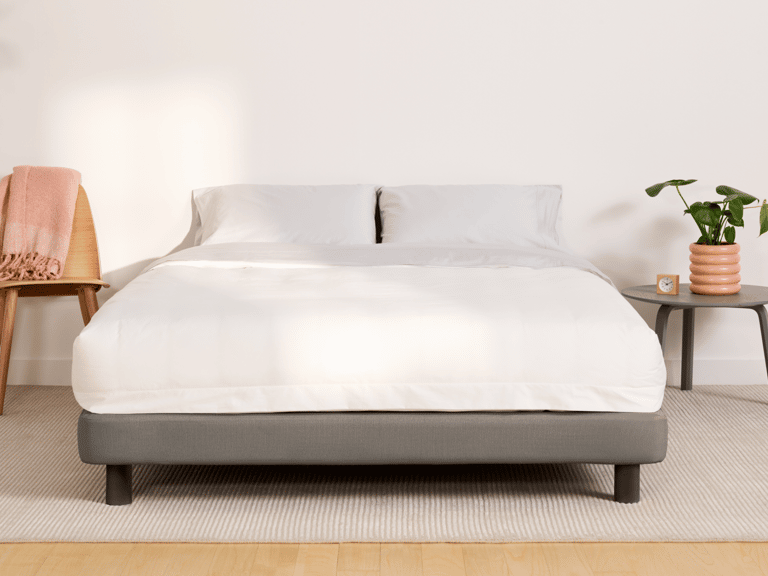
Platform bed frames support a mattress directly, typically using a solid deck or closely spaced slats rather than requiring a separate box spring. Their straightforward construction can create a clean, low-profile bedroom setup while helping keep the mattress stable. Frame height, support design, and mattress compatibility are important factors when evaluating this bed-frame category.
An Upholstered Bed Frame combines a supportive frame with fabric-covered surfaces, often including a padded headboard. The cushioning provides a comfortable backrest for reading or sitting in bed, while upholstery softens the room’s appearance. A well-designed frame also keeps the mattress securely positioned and can reduce the need for additional foundation components.
Platform construction can suit a range of mattress types, but the mattress manufacturer’s support requirements should guide selection. Slat spacing, center supports, weight capacity, and overall dimensions affect stability and durability. Measuring the mattress and bedroom helps ensure an appropriate fit, while checking assembly details clarifies how the frame is installed and maintained.
Bed-frame choices also influence how bedding fits and functions. Fitted sheets should match mattress depth, and pillows, blankets, and other bedding can complement the frame’s height and upholstered headboard. Regularly checking slats and fasteners helps maintain dependable support; cleaning upholstered surfaces according to care instructions can preserve their condition over time.
Materials and intended use matter when choosing furnishings for different sleeping spaces. Organic mattresses and organic crib mattresses are separate mattress categories, each with specific sizing and support considerations; they should be paired only with compatible frames designed for their dimensions and use. Understanding these distinctions supports safer, more comfortable bedroom planning.
 Furniture